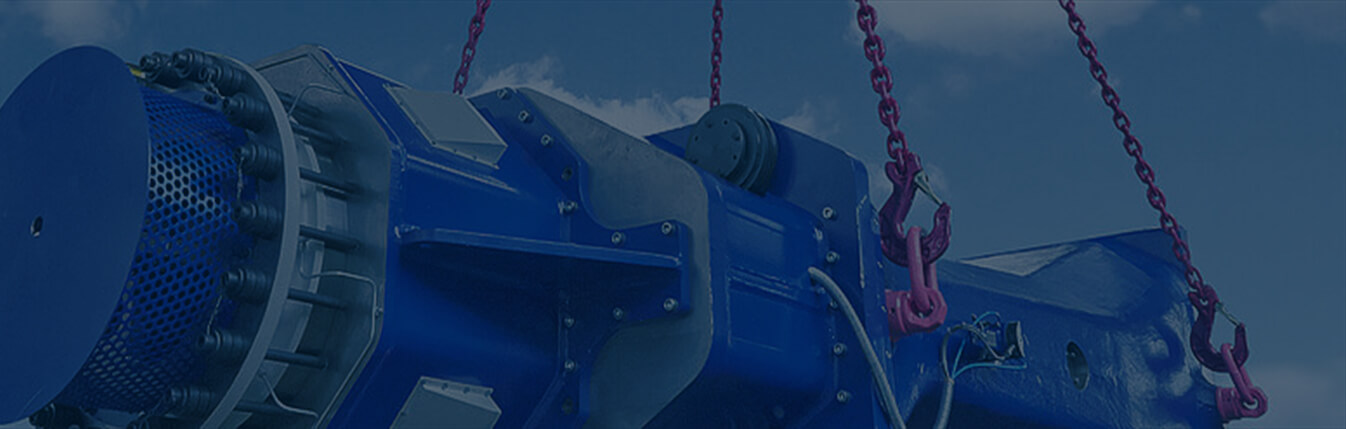
RUD India Chain Slings elevate the quality of the everyday workhorse of industrial lifting, offering unmatched versatility and strength for your lifting and rigging needs. Crafted from high-tensile steel using cutting-edge processes, our chain slings and lifting components guarantee superior durability and ease of handling built to meet the demands of construction, manufacturing, shipbuilding, and material handling operations across India.
Chain Sling
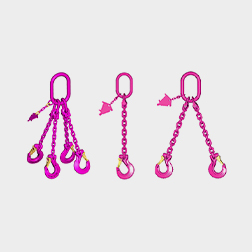
At the heart of every lifting assembly, RUD India's chain slings are available in 1-leg, 2-leg, 3 & 4-leg, and endless configurations to suit everyday lifts as well as heavy-duty and specialty applications. Explore our Chain Sling range to find the right configuration for your operation.
Connectors
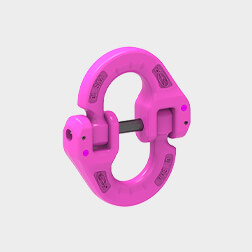
The all-purpose VIP coupling link, designed to securely join lifting points, grabs, and chains without movement or damage risk. Learn more about RUD Connectors.
Hooks
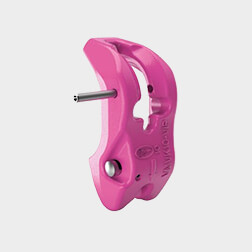
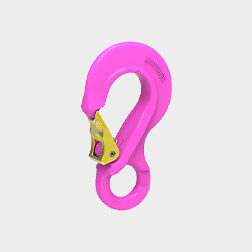
From eye hooks to clevis and self-locking variants, RUD India's range of hooks ensures a secure, reliable connection point for every chain sling assembly. View our Hooks range.
Master Links
Master links form the central connection point for multi-leg chain slings, distributing load evenly across each leg for balanced, secure lifting. Available in single and multi-leg configurations. Explore Master Links.
Shorteners
RUD India's chain shorteners allow quick and easy adjustment of chain leg lengths, helping achieve level loads and balanced lifts without changing the sling itself.
RUD India understands the importance of adaptability and customizable solutions in the world of industrial lifting and material handling. We accept requests for custom solutions based on your business requirements and offer solutions tailor made for your material handling needs. In the event you need guidance, our team of experts can help you select the right chain sling configuration and components for your business.
RUD chain slings and lifting components are manufactured from high-grade, heat-treated steel for exceptional strength and wear resistance, translating to long service life for demanding lifting tasks. Each product undergoes rigorous testing and certification to meet the highest safety standards, providing you with peace of mind during even the most complex lifting operations.
You can invest in RUD India Chain Slings with full confidence, knowing you're covered by one of the best chain sling manufacturers in India. Contact RUD India today to explore our comprehensive range and discuss how we can elevate your lifting operations.
Within limits, yes. Grade 80 and grade 100 lifting chain slings hold up in heat that would ruin wire rope or polyester webbing, so foundries and forging shops rely on them. Here is the catch. Below 200°C they keep full capacity. Heat them to 300°C and you lose roughly 10 percent. At 400°C the loss can hit 25 percent. Push a grade 80 chain sling past 400°C and most makers say take it out of service entirely. Different grades derate at different rates too, so do not assume one chart fits all. Check the tag and the maker's table first.
It comes down to a few basics. Start with the worst-case load weight and the angle the legs will hang at, because both cut into the capacity stamped on a single leg. Then look at the load itself. An odd-shaped pipe suits an endless sling, while a motor base with four lugs wants a four-leg set. Hot, wet, or chemical-heavy sites narrow the field further. Match your chain hook types to the real pick points too, whether that means a clevis grab hook or a self-locking hook. Still unsure, RUD India's team will spec the right chain sling for you.
Here is the part that trips people up. A 4 leg chain sling almost never loads all four legs equally. Manufacturing tolerances leave the legs slightly unequal in length, so on a rigid load you cannot count on even sharing. The safe convention is to rate it as a three-leg sling. Angle matters just as much. The wider each leg sits from vertical, the less it holds, and a leg angle past 60 degrees gets risky fast. So take the single-leg limit, apply the angle factor, then the three-leg rule. At 45 degrees that factor lands near 2.1. When in doubt, trust the certified tag, not mental maths.
Chain slings come in several configurations, each suited to a different lifting job. A single-leg sling handles straightforward vertical lifts. Two-leg versions spread the weight across two points for moderate loads, while three and four-leg slings give extra stability when lifting machinery, slabs, or fabricated structures with multiple attachment points. Endless chain slings use a closed loop, which works well for awkward shapes, pipes, and cylindrical vessels. Beyond the leg count, lifting chain slings differ in their fittings, including the master links and the chain hook types fitted to each leg. RUD India also builds custom assemblies when a standard chain sling does not match your needs.
Inspection is the whole game with lifting chain slings. Before every lift, run your eye and hand over the links, master link, and hooks. You are hunting cracks, nicks, twisted links, and hook latches that no longer snap shut. Then measure. Lay a set number of links against the original length, because overload stretches steel and stretched chain is scrap. Store it on a rack, dry, away from acids and damp floors. Found damage? Tag it out and bin it. Never fix a chain sling by welding or heating in the workshop. On top of that, a competent person should log a full inspection yearly.

 111/112, 1st Floor, Orion Business Park, Next to Cine Wonder Mall, Ghodbunder Road, Thane (West), Thane - 400607, MH, India




 (+91) 22 62428500 to 90




.jpg)